Your curls easily lose their definition and clumps when they run dry. Normally, curly hair feels drier than other hair types because sebum finds it a bit difficult to travel from the scalp to the hair ends. A leave-in conditioner for curly hair fixes that by leaving slip and moisture on the lengths after you wash. The right one depends on your strands, not just your curl pattern: fine, low-porosity or easily weighed-down curls do best with a light mist of our Leave-In Spray, while thick, coarse, dry or coily hair needs a small amount of our Leave-In Conditioner Cream. If your curls still dry crunchy after you match a leave-in to them, the leave-in is rarely the cause; it's usually too much gel or mousse on top. Here's how to choose, how much to use and how to layer it for soft, defined curls.
What Is a Leave-in Conditioner, and Why Do Curls Need One?
A leave-in conditioner is a lightweight, non-rinse hair product, usually applied to damp hair after washing. It leaves conditioning ingredients on the hair to improve moisture, softness and manageability, make detangling easier, reduce friction and help control frizz between washes.
Curly strands easily rub against each other and tangle. Because of the bends and curves, it's hard for scalp oils to travel down the hair length, making the mid-lengths and ends drier than the hair roots. A leave-in conditioner for curly hair helps to keep your lengths moisturised, makes curls clump together and reduces tangling, friction and hair breakage.
How a Leave-in Differs From a Rinse-Out Conditioner
A leave-in conditioner differs from a rinse-out conditioner in how it's used, its contact time with the hair and its formulation. The table below clears up a common misconception, that a leave-in is just a diluted rinse-out conditioner, and shows the difference.

| Feature | Leave-in Conditioner | Rinse-out Conditioner |
|---|---|---|
| Main purpose | Provides conditioning after washing | Conditions and detangles hair during washing |
| When used | Usually after washing, on damp or towel-dried hair | After shampooing |
| Rinsed out? | No | Yes |
| Contact time | Remains on hair until the next wash | 3 to 5 minutes |
| Formula | Formulated to leave an appropriate amount of conditioning ingredients on hair | Formulated with richer, fast-acting conditioning agents because it will be rinsed away |
What a Leave-In Conditioner Actually Does for Curly Hair
A leave-in for curly hair lubricates the surface of your curls so they glide past each other more easily. The job of this no-rinse conditioner for curly hair is to keep curls hydrated, encourage curl clumping and help reduce frizz and hair breakage.
A well-formulated leave-in contains humectants, emollients and film-forming conditioning ingredients. The humectants, which are water-attracting ingredients, help to bind moisture to dry parts of your strands, while the emollients and film-forming ingredients work to soften and smooth rough cuticles, reduce moisture exchange and provide protection from environmental and mechanical stress.
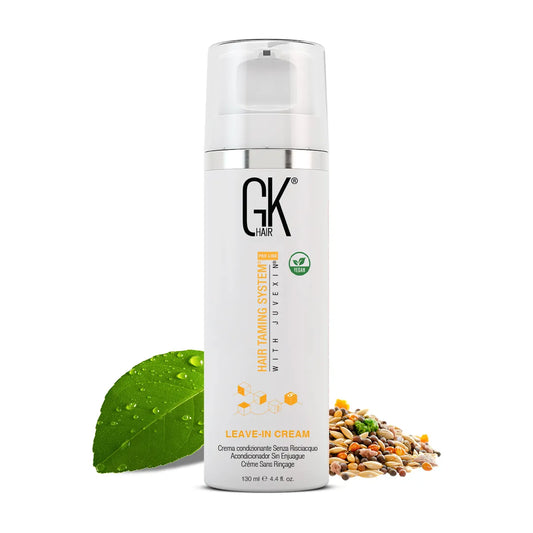
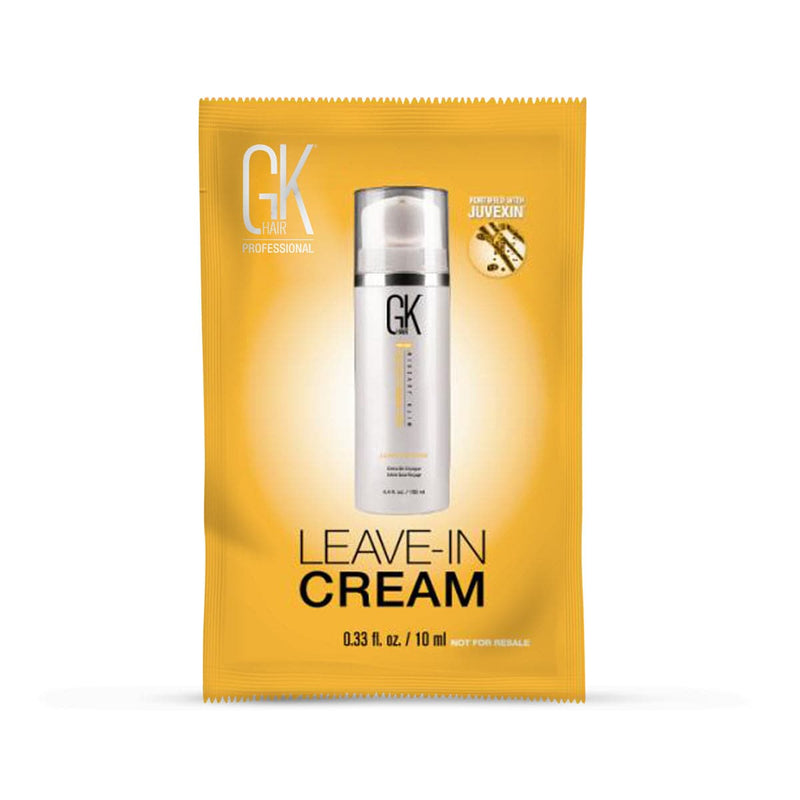
The GK Hair Leave-In Conditioner Cream, best for weightless conditioning and smoothing without a sticky feeling, is sulphate-free and made with Juvexin V2 and natural grain extracts. Juvexin V2, our plant-based protein derived from quinoa and pea, works with natural grain extracts to strengthen strands and help protect them against damage, while the cream's weightless conditioning smooths frizz and flyaways without a sticky feel.
Is a Protein Leave-in Right for Curls?
Proteins such as Juvexin V2 help strengthen strands and smooth rough cuticles, which suits porous, coloured or heat-styled curls. If your curls start to feel stiff or straw-like, use less or alternate with the lighter spray, since some curls need more moisture than protein.
Benefits of Using a Leave-in Conditioner for Curly Hair: Day One vs Over Time
On day one, a leave-in adds slip, so curls feel softer, detangle more easily and clump with less frizz. Over time, the payoff is less damage from handling: leave-on products reduce friction between strands and make curly hair easier to comb, and friction during combing is a key driver of breakage.
A leave-in conditioner is not a one-time magical curly hair product. Build it into your consistent curly hair routine alongside your moisturising shampoo, rinse-out conditioner and curly hair cream to see noticeable effects.
How to Use a Leave-in Conditioner for Curly Hair Without the Crunch
A leave-in conditioner should leave curls soft, conditioned and manageable, not stiff or coated. If your hair feels crunchy after styling, the cause is often too much product layering or a styling gel or mousse that creates a firm cast. These steps help keep your leave-in routine lightweight and comfortable.
- Apply leave-in to damp, not soaking wet hair: damp hair helps distribute the product evenly, so you can use less while still getting good coverage and slip.
- Start with less leave-in than you think you need: use only enough to soften and condition your curls. Applying too much can leave your hair coated, greasy or weighed down, so adjust the amount to your hair's condition.
- Spread the product between your palms first: emulsifying the leave-in in your hands helps prevent concentrated product buildup in one section of your curls.
- Apply mainly to the mid-lengths and ends: concentrating leave-in away from the scalp conditions the areas most prone to dryness without weighing down the roots.
- Use the leave-in to detangle: apply it before detangling to increase slip and reduce friction between strands, making knots easier to work through.
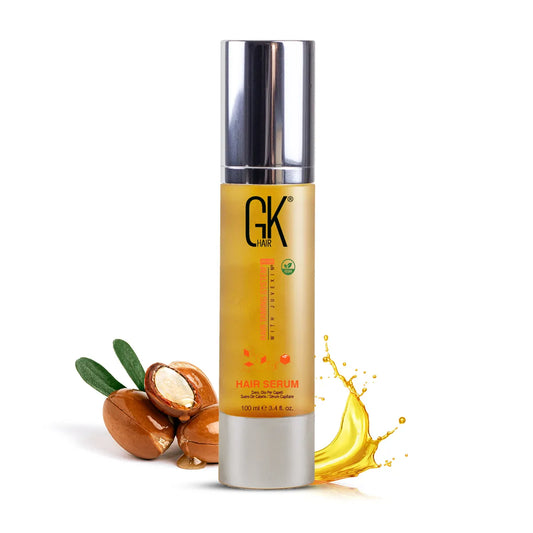
- If curls dry crunchy, scrunch out the gel cast with a drop of serum.
- Let your hair dry completely before judging the result: assess your curls once dry to see whether the leave-in has left them soft and flexible or coated and heavy.

Which Leave-in Suits Your Curls?
Match the formula to strand thickness, density and porosity, not only curl pattern.
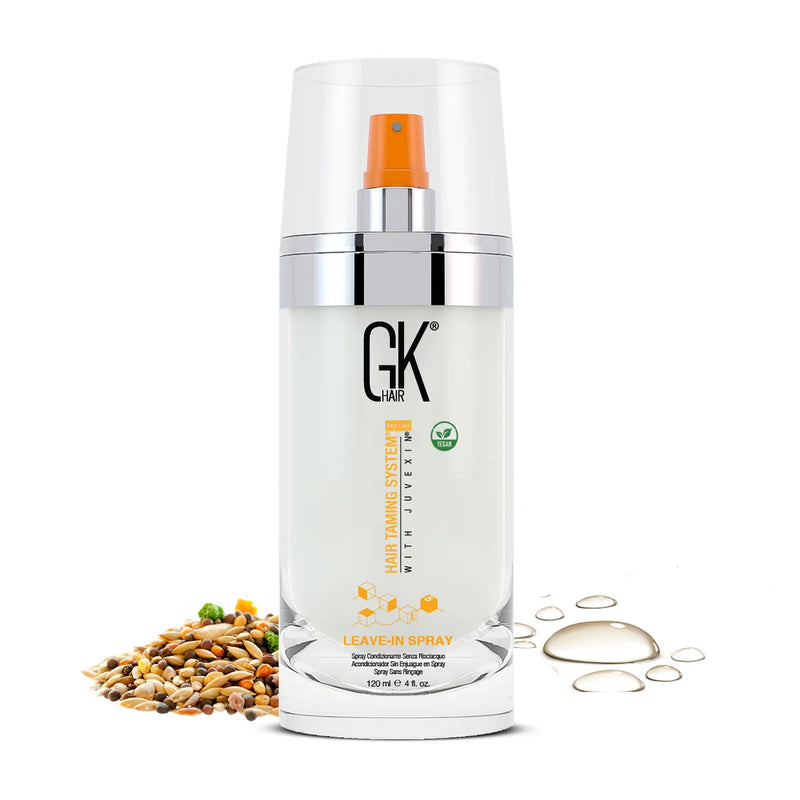
- Fine, low-density or low-porosity waves and curls: a light mist of Leave-In Spray on damp mid-lengths and ends.
- Medium curls, or waves still dry after the spray: a pea-sized amount of Leave-In Conditioner Cream.
- Coarse, dense, high-porosity or very dry curls, coils and afro hair (3A to 4C): a coin-sized amount of the cream, worked through in sections.
- Need more definition and hold: follow with CurlsDefineHer curl cream, then gel or mousse.
A tighter pattern doesn't automatically need a heavier formula; fine 3C curls may need less than coarse 3A curls.
Stylist's Corner: Start with the lightest formula, our Leave-In Spray, and move up to the cream only if your curls still feel dry or rough once they've dried. Not sure whether your strands are fine or coarse? Roll a single strand between your fingers, or try the tests in our thin vs thick hair guide.
Have you ever wondered why hair experts talk about the need to use sulphate-free shampoos on curly or coloured hair? Read our sulphate-free shampoo guide to know exactly how sulphates can act as a “threat”.
When to Apply a Leave-In Conditioner for Curly Hair, and How Often
The best time to apply a leave-in conditioner is usually after washing your hair, while your curls are still damp. But you can also use it between wash days when your curls need extra moisture, softness or manageability. How often you need a leave-in depends on your hair's condition and how frequently you wash.
On Wash Day
Apply your leave-in conditioner after cleansing and using your rinse-out conditioner. Gently squeeze excess water out of your hair, then distribute your leave-in through your towel-dried, damp hair, concentrating on your mid-lengths and ends. Scrunch upwards afterwards to encourage your curl clusters.
Damp hair helps the leave-in spread more easily and, in turn, the leave-in provides conditioning and slip as your curls dry. Follow this step with your styling products: curl cream, mousse or gel.
You do not rinse out a leave-in conditioner. Unlike a rinse-out conditioner, it is formulated to remain on the hair after application.
Between Wash Days
You can use a leave-in conditioner to refresh curls between washes when they feel dry, rough or tangled, or look uneven and shapeless. Lightly misting your hair with water first helps to distribute the product and reactivate your existing style.
Use a small amount, particularly if your hair is fine, low-density or prone to buildup. Apply mainly where your curls need refreshing rather than automatically coating your entire head with more product every day.
Can You Apply Leave-In Conditioner to Dry Hair?
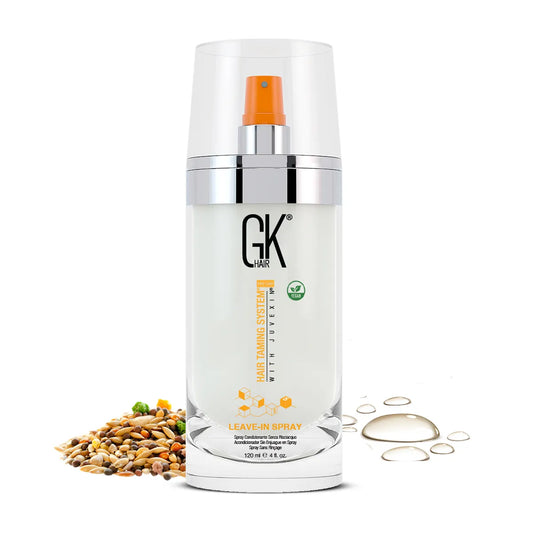
Yes, with the right format. Our Leave-In Spray can be misted onto dry curls between washes for targeted softness and frizz control. Save the Leave-In Conditioner Cream for damp hair: re-wet dry sections with a spray bottle until they feel damp, then smooth a pea-sized amount through the mid-lengths and ends.
How Often Should You Use a Leave-In Conditioner?
There is no fixed schedule that works for every curly-haired person. A simple rule is to apply enough to improve softness, slip and manageability without leaving a noticeable coating on the hair.
Conclusion: Give Your Curls the Conditioning They Need
A leave-in conditioner for curly hair provides the extra conditioning, slip and softness that make curls easier to detangle, style and maintain between wash days. To find the right formula for bouncy, well-defined curls, explore the GK Hair Moisture & Hydration Collection.
Frequently Asked Questions (FAQs)
Are leave-in conditioners good for curly hair?
Yes, absolutely. Leave-in conditioners are essential for curly hair because curls dry out faster than straight hair; natural oils don't travel down your curl pattern easily. A lightweight leave-in hydrates curls, reduces frizz, helps curls clump and keeps your curls soft and bouncy between washes. They're especially helpful in the UK's humid climate, where moisture control matters most.
Can you use a normal conditioner as a leave-in?
No, you shouldn't. Regular rinse-out conditioners are formulated to be washed out after a few minutes; they're too heavy to sit on hair all day. Leaving them in may weigh your curls down, create buildup and make them look greasy or limp within hours. Leave-in conditioners are formulated to be lighter, faster-absorbing and designed to stay. For best results, use your leave-in after the rinse-out conditioner. Learn more about what happens if you leave conditioner in your hair.
What's the best leave-in conditioner for dry curly hair?
The GK Hair Leave-In Conditioner Cream is the best leave-in for dry curls. It pairs Juvexin V2, a plant-based protein, with natural grain extracts for weightless conditioning that softens, smooths frizz and adds slip without a sticky feel. Apply a coin-sized amount to damp mid-lengths and ends on wash day; between washes, mist curls with water until damp, then refresh.
Is leave-in conditioner enough on its own, or do I still need a curl cream?
It depends on your curl type and hold needs. A leave-in conditioner adds moisture, softness and slip, which helps curls clump. If your curls need hold to stay defined between washes, layer our CurlsDefineHer cream or a styling mousse on top. Think of it this way: leave-in gives hydration, curl cream gives shape. For loose waves or 2A to 2C curls, leave-in alone often works. For tighter curls needing structure, combine both.