Anyone in the UK, except those whose scalps have reached full transparency (bald), has at least a million things to say about the climate putting a limit on the Pinterest hairstyles they could try.
When it’s not the year-round humidity puffing up strands, it’s the woolly beanie meant to protect you from the winter chills rubbing against your tresses to cause split ends, or the sun, after almost 10 months of hiddenness, sucking off the moisture and leaving your strands dry.
For the not-so-straight, not-so-wavy hair lads and lasses, aka the straight wavy hair peeps, who are unsure of whether to treat their hair as straight or wavy, we’ve written this to help your hair blossom, wherever you are in the UK.
What Is Straight Wavy Hair?
Straight wavy hair has roots like straight hair and very loose ‘S’ waves that may or may not be easily noticeable through midlengths and hair ends. People whose tresses usually behave this way fall into the 1C and 2a hair patterns.
This “not so straight, not so wavy” hair borrows a few characteristics from both straight and more wavy hair, making caring for it a bit tricky. If you share this hair texture, you may notice your waves disappear when you follow a straight hair routine, or your strands being limp and greasy when you follow a heavy wavy routine.
However, straight wavy hair may show up as a mixture of two hair textures, with some strands completely straight from roots to ends and others with a wavy pattern from roots to ends.
The correct way to build your straight wavy hair routine is knowing which steps to borrow from straight and wavy routines and which to dispose of.
Why Is My Hair Straight and Wavy?
Whether you notice them as being straight at roots and wavy on midlengths and ends, or as some strands completely straight and some wavy through the entire hair length, there are a few explainable reasons why you have straight wavy hair.
Different follicles: When your scalp is mixed with round (for straight strands) and oval (wavy hair) follicles, your hair will be mixed with both straight and wavy hair.
Hair weight: Long, thick tresses pull top and front sections straight, while the shorter or underneath hair springs up to waves.
Hormones and aging: Hormones or aging can alter your hair texture. So you may notice new roots being completely different from old hair ends along the course of your life.
Bad haircare routine: Using bleach, dyes, or flat irons consistently loosens the natural wave pattern, often making the outer layer straight from damage, while the underlayers stay hidden and wavy.
Bad layering and cuts weigh down hair ends, forcing wavy hair to look straighter.
The Straight Wavy Routine That Works in the UK (To Enhance Your Wave Pattern)
Five steps make up the best straight wavy hair routine: cleanse, condition, style, dry, and finish. These steps work to take your strands from tousled waves to well-defined beachy waves.
Step 1: Wash without stripping your hair.
Because of straight roots and loose waves, straight, wavy hair is a combination of oily roots and almost dry midlengths and ends. As one with type 1C or 2A hair, your wash day goal should be to wash off grease while moisturizing your waves so they don’t dry out.
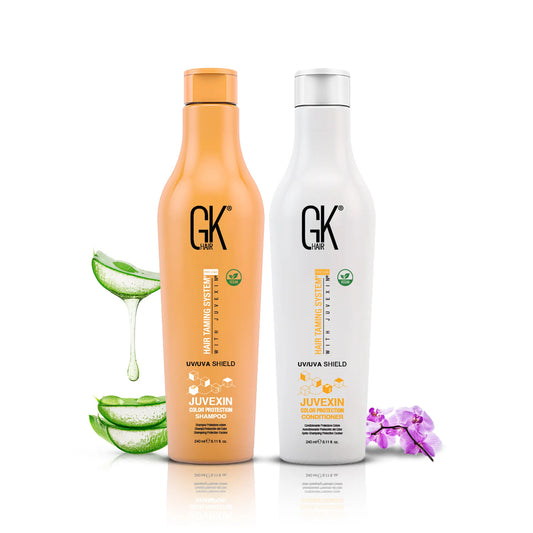
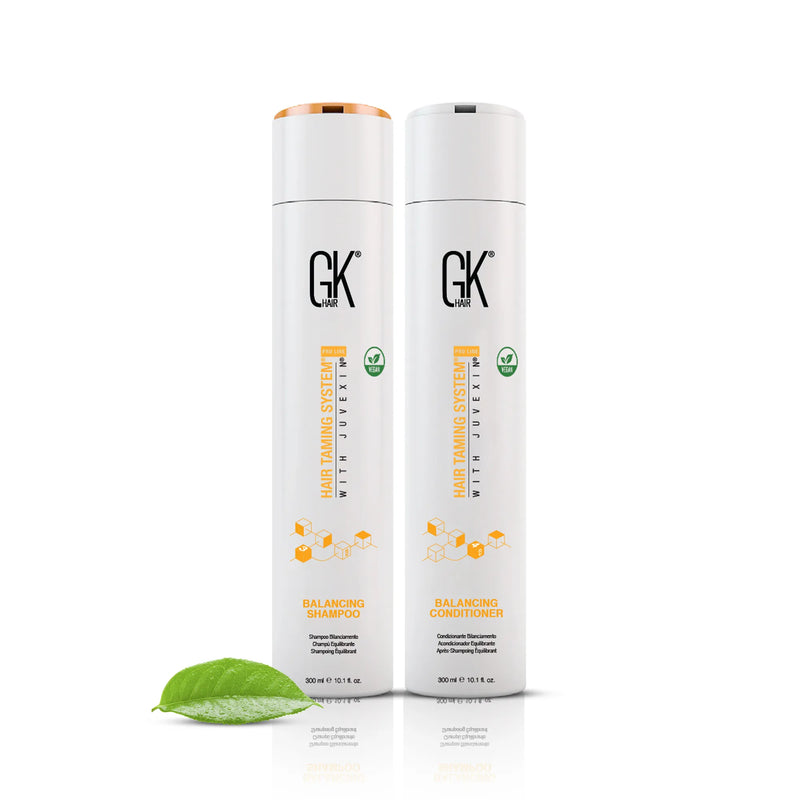
A high-performing, sulfate- and parabens-free balancing shampoo is the right formula to achieve your goal. Best for instantly clearing out the oil from the roots while hydrating the ends of the hair strands without weighing your hair down in less than 3 washes, the GK Hair Balancing Shampoo is always handy to have in bathrooms for straight wavy heads.

Before washing, because knots and tangles are associated with straight wavy strands, you should detangle from your ends and work up. Damp with water or a conditioner before detangling, as dry detangling is very bad for your strands.
With a balancing shampoo, you’re creating a clean canvas for other steps in your blossoming routine for your hair type.
Identified your wave type yet? Read: Wavy Hair Types Explained: Find Out Which One You Really Have
Step 2: Condition—but don’t overload it.
Conditioning hair is all about adding moisture where it’s needed. Type 1C and 2A hair needs this moisture focused on their midlengths and ends. They get weighed down easily, so you’d be sure to avoid the roots while conditioning and use a well-sized amount on midlengths and ends.
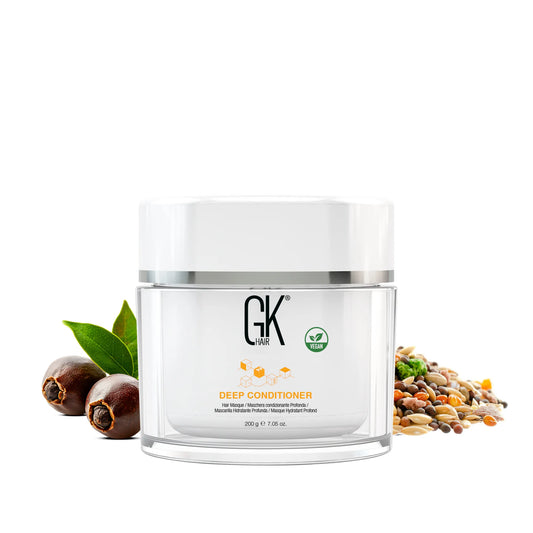
Your straight wavy routine conditioners should include a lightweight rinse-out for wash days, deep conditioners for weekly or biweekly use, and a leave-in conditioner for daily refreshes between washes.

After using your balancing shampoo to wash, apply your slippery rinse-out conditioner and use your fingers to rake through and detangle your strands. Flip your hair forward, cup water in your hands, and gently scrunch upwards into your hair continuously. This is known as the squish-to-condish method, which is very effective in forcing moisture into the hair shaft, reducing frizz and encouraging wave definition.
Step 3: Apply lightweight styling products
Straight-wavy people may fall into either of these groups: those with more wavy hair than straight, and those whose strands are more straight than wavy.
Either way, the general rule is to style while wet. This gives you the chance to enhance your wave definition before it dries (most people complain that their waves are well defined while wet but completely tousled when dry).
To achieve this, you’d comb a lightweight leave-in conditioner or CurlsDefineHer Cream and styling mousse through your tresses. Using the same movements of the squish-to-condish, scrunch upwards to push in the leave-in for moisture, and the mousse to hold the shape of your waves.
If you use only leave-in, your hair will be soft, but the waves will fall flat within an hour. If you use only mousse, your hair will hold its shape but look dry, stiff, and dull.

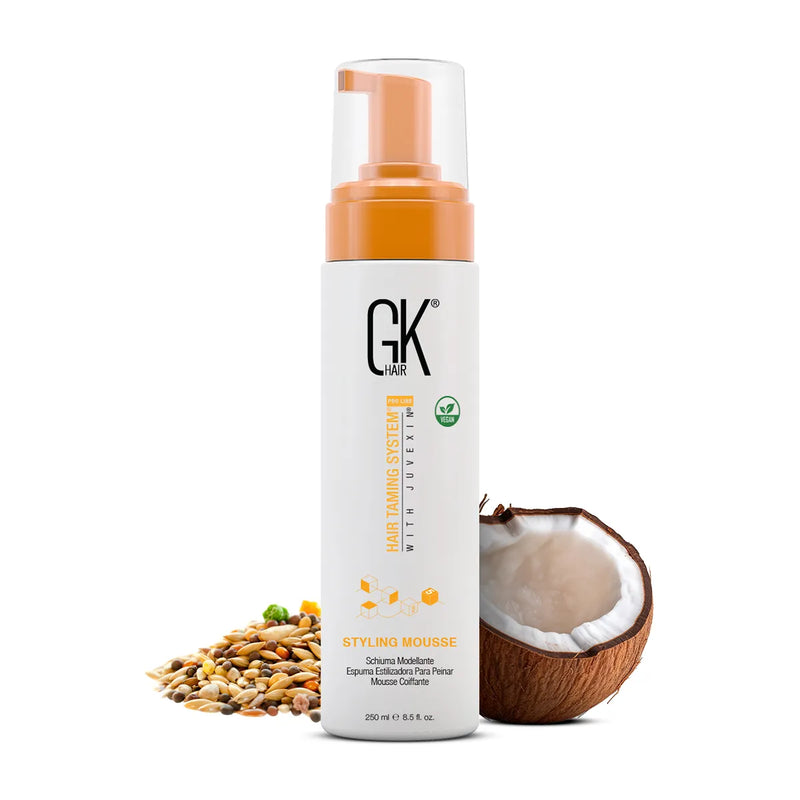
GK Hair’s Styling Mousse: Best for lightweight hold and definition for beachy waves.
Step 4: Dry without disturbing the waves
How you dry straight wavy hair determines whether they come out flat or retain their wave pattern. You dry your strands first using a microfiber towel or old cotton t-shirt. Cup your strands into it, and squeeze upwards to remove excess water.
You could either let your strands air dry, but be sure to keep your fingers away, or use a hair dryer with a diffuser attachment on low heat and low speed. If you choose the latter, you’d cup your hair into the diffuser bowl and gently press up towards your scalp. Brace yourself, as it’d take time, but it’s worth not destroying what you’ve already started!
Step 5: Finish and Soften
When your hair is completely dry, you may notice it being a bit stiff. Don’t fret, it’s a protective cast from the styling mousse, and it’s completely normal.
Scrunch out the crunch (cast) with clean, dry hands and a little help with a single drop of lightweight oils like argan oil. This lightweight oil also helps in sealing out humidity and frizz.
Stylist’s Corner: Straight wavy hair comes in different forms, and it’s best known for its tousled looks. Some with this hair type have more wavy than straight strands, and some more straight than wavy strands. Most hair blogs will fail to talk about this disparity as they give advice tailored to fit those whose waves can be enhanced.

However, if you fall in the latter category, and your tresses are more of straight hair, you may decide to use a keratin smoothening treatment to rock a complete straight look, especially if you’ve tried enhancing your waves without luck.”
How the UK Climate Changes Your Straight Wavy Hair
The loose wave pattern of straight wavy hair can easily be influenced by moisture, friction, and other conditions. In the UK, your hair can move between humid outdoor air, rain, cold weather, and centrally heated indoor spaces within the same day. These changes don’t permanently change your hair type, but they can affect how your strands behave.
Humidity & Rain
When moisture from humid air or rain gets to straight wavy tresses, they make loose waves expand, separate, and lose their definition. Those carefully scrunched wave patterns can easily turn to puffiness and frizz.
Moisture from humid air and rain causes straight, wavy hair to expand in volume and lose its wave definition. For loose waves that lack the structural integrity of tighter curls, this expansion reads as frizz. This is one reason a wave that looked smooth and well defined when you left the house changes to a fluffier, less uniform, or defined hair later in the day.
What to do: Give your waves a strong hold before leaving the house. Use anti-humidity sprays or serums to seal cuticles and protect your strands. You can wear protective styles to keep your hair from moving around in damp hair.
Wind & Hardwater
Windy afternoons in London come with constant movement of your hair. This separates your wave clumps, creates tangles, and increases friction against your coat, scarf, or jumper. By the time you get to your destination, your smooth waves look more like a cloud.
Your shower water, if hard, contains minerals like calcium or magnesium. Using hard water in the UK to repeatedly wash hair gives these minerals enough time to build up, leaving your strands feeling coated, dull, and less manageable. You may respond to your observation by adding more conditioner or styling products, only to make your hair flatter and heavier.
What to do: For windy days, protect your hair when the wind picks up. Avoid repeatedly brushing it back into place, and gently reshape your waves once you’re indoors.
For hard water, when your hair feels coated or your usual routine suddenly stops working, consider buildup, and use a clarifying shampoo or a chelating treatment.
Winter Heating
Winter in the UK is very tricky. The cold, dry outdoor air dries out the hair strands with time, and the heated indoor heating can make the air drier.
This shows up on straight wavy strands as dry-feeling lengths, flyaways, static, and a less smooth wave pattern.
What to do: Keep your midlengths and ends conditioned during cold winters, minimize friction from wool, cotton, or acrylic scarves and beanies by using silk or satin as a barrier before you put them on, and use lightweight products that smooth without flattening your waves.
Why Your Straight Wavy Routine Isn’t Working
Your routine may not be delivering results because you skipped a critical step, focused unevenly across the five steps, or haven’t adapted to your local climate and conditions.
To get a routine that works a hundred percent for you, you may need to test out different products to see which fits. GK Hair is trusted in over 75 countries, including the UK, where professionals and home users alike have figured out the routines that work for straight wavy hair.
Most report that they don’t spend unnecessary time testing to figure out what works for them—they get results faster.
|
Problem |
Possible reason |
What to change |
|
Waves disappear after drying. |
Too much weight/not enough hold |
Use lighter products. + stronger hold for the waves while wet |
|
Hair looks greasy. |
Too much conditioner/product. Applying conditioner to the scalp or roots. |
Reduce product quantity. Avoid roots and scalp while conditioning. |
|
Hair is fluffy and frizzy. |
Friction/Brushing/Humidity |
Use anti-humidity sprays and serums. Change drying + styling technique. |
|
Roots are flat. |
Hair weight/product buildup |
Keep roots lightweight. Treat roots as straight hair roots. |
|
Hair feels coated. |
Product or mineral buildup |
Use a clarifying shampoo or chelating formula when appropriate |
|
Waves look great wet but straight dry. |
Waves aren’t supported during drying. |
Scrunch, use hold, and minimize disturbance. |
How To Maintain Your Waves Between Washes
A light spritz of water, non-heavy leave-in conditioner, coin-sized amounts of your styling mousse or curl-enhancing cream, and a dry shampoo are exactly what you’d need to maintain your waves between washes.
For Day 1
It’s one thing to get straight wavy hair to look good on wash day. Keeping it that way for the next two or three days is where the real test begins.
Your loose but well-defined waves may flatten while you sleep, become fluffy from humidity, or lose definition as natural oils build up at the roots. The answer isn’t a full wash or another handful of styling products. However, not every morning needs a refresh.
For Day 2
If your waves are mostly still intact but have flattened in a few places, start with water. Lightly mist your midlengths and ends, then scrunch upwards to encourage wave clumps.
If after drying, a few sections still remain flat or frizzy, use a coin-sized amount of the CurlsDefineHer Cream, best for taming flyaways and smoothing your tresses to enhance your curl pattern without weighing it down.

CurlsDefineHer Styling Cream: Best for taming flyaways and clumping waves
For Day 3
By day three your waves may have lost more of their original shape, particularly around the crown and the sections you sleep on. Start the same way as you did on day 2, and let it dry to see how it looks before adding anything else.
If it still looks flat or undefined, use a small amount of the GK Hair Styling Mousse, the best lightweight styling product to give your waves hold and enhance definition. If your hair is becoming oily at the roots, adding more styling products won’t solve it. Use a dry shampoo instead.
|
Start with water when: |
Add a little product when: |
Don’t add more product when: |
|
Your waves are still present but look flat or slightly frizzy. |
Water alone isn’t bringing the wave back. |
Your hair already feels coated and sticky. |
|
Your hair feels clean and lightweight. |
Some specific sections have lost definition. |
Your waves look greasy or stringy. |
|
You want to reactivate your existing wave pattern. |
Your hair needs more hold to keep the reshaped wave in place. |
Your roots are flat from product buildup. |
|
Your styling products are still providing some hold. |
Your hair still feels clean and isn’t weighed down. |
You’re repeatedly layering products without washing them out. |
For Sleep: Sometimes, your best day 2 routine starts the night before. Sleeping with your hair loose can flatten your waves and create friction. A loose, high ponytail or bun, often called a pineapple, keeps your lengths from being crushed while you sleep. Add this to using silk or satin bonnets or pillowcases for sleeping, and your straight, wavy sleep routine is set.
Know someone struggling to find a curly hair routine that works in the UK? Our curly hair step-by-step guide might just be of help!
How To Make Straight Hair Wavy
You can make straight hair wavy by either using heat-free or heat-based techniques.
Most people with type 1 hair usually ask, "How can I make my straight hair wavy?" Before we go into detail, you should know that you can only create temporary waves, not permanently alter your hair’s natural texture.
Unlike type 1C hair that has bends along its hair length, which makes it easy for waves to build, you’d have to manually introduce waves to types 1A and 1B by using texture-building sprays first. The wash and scrunch method won’t work for them.
Step 1: Prep Hair
Straight hair is very sleek, so it can’t hold volume. To create waves, you must first clarify to remove grease and use a lightweight conditioner on ends only. Applying conditioner to your roots may flatten them and make it impossible for them to hold waves.
After washing out the conditioner, dry with a microfiber towel till it's damp. Damp hair, not very wet hair, is the starting point for working towards waves in types 1A and 1B hair using the heatless method.
Step 2: Apply Grip Products
Mist a texturizing spray to add grip to slippery strands. Sea salt spray works for many, but if you’re looking for one specifically designed to add volume at the roots without weighing down 1A-1B hair, use the VolumizeHer spray. It holds shape through the drying process, which heatless methods rely on.

Step 3: Set the Waves
To set the waves without heat, you need to style in a way that gives a wavy shape while it dries. This could be through heatless curling rods, a high twisted bun, or the rope braid method. Whichever method you use should be left to dry.
Using hot tools to set waves looks like applying a heat protectant on dry hair and using a flat iron to push your hair upwards and in opposite directions to form s-waves. You’d repeat this along your hair’s length.
Giving your straight hair a wavy look using the heatless method is best used when you want to wear the look for a short time, because it wears away in 7-12 hours (4 hours for stubborn straight hair). Heat-based waves stay for 24-72 hours.
Conclusion: Your Straight Wavy Strands Can Blossom…
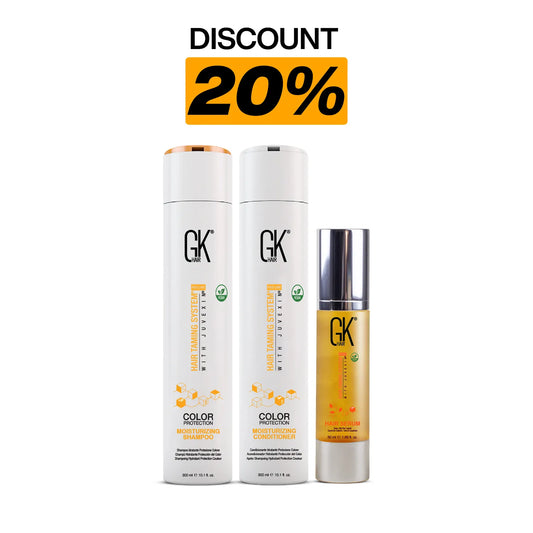
A routine that works for straight wavy strands is a simple five-step routine. Because of its uniqueness, borrowing properties from both straight and wavy hair, yet refusing to be treated as one, it should be followed with care, especially with the UK’s climate. Our Anti-frizz and Shine Collection puts together the essentials your straight, wavy hair needs to blossom!
Frequently Asked Questions (FAQs)
Can hair be both straight and wavy?
Yes. Your hair can have multiple textures simultaneously due to genetics, hormone shifts, or styling damage. It is common to have a pin-straight crown paired with wavy or coarse underlayers, or straight roots that transition into loose, flowing waves at midlengths and ends.
How can I tell if I have straight or wavy hair?
Wash your hair with a gentle, sulfate-free shampoo, skip all styling products, and let it completely air dry without brushing it. If your dry strands lay entirely flat and uniform, your hair is straight. If you notice distinct “S” shapes, bends, or beachy curves forming, you have wavy hair.
How to get curly hair with straight hair?
To go from straight to curly hair, prep damp hair with a high-hold volumizing mousse, wrap small sections around satin overnight rollers, and let them dry completely. For faster results, prep dry hair with a thermal protectant and use a small-barrel curling iron, pinning each curl until it cools.
What hair type is straight but wavy?
Type 1C and 2A hair are the two common hair types that can be classified as straight and wavy. They aren’t completely the same, though. Type 1C has strands that are thick, coarse, and prone to frizz, with subtle, lazy bends, while Type 2A has fine strands, with roots like that of straight hair, and very loose waves along midlengths and ends.