Light brown is the shade people ask for most and describe least precisely. It covers everything from a cool, smoky mousy brown to a warm caramel, and the shades behave nothing alike on the same head of hair.
Light brown hair sits between medium brown and blonde and can be warm, cool or neutral. It is centred on level 5 to 6 on the professional colour scale, with the level 7 and 8 brunette-blonde shades at its lighter end and level 8 reading as very light brown.
The best shade depends on your starting hair level, your undertone and how much regrowth maintenance you're willing to commit to. Choose from natural, ash, beige, honey, golden, caramel, chestnut or lighter brown tones, then match the shade to the right colour formula and technique.
What counts as light brown hair?
Light brown's finished look depends on both depth and undertone, and the same shade name can look different again with texture and lighting. It is not made by mixing a blonde tube into a brown one.
A colourist chooses one shade at your target level, say a 6.8, and pairs it with a developer that either deposits tone or lifts your natural pigment first. If your hair is already light, the colour only needs to deposit brown pigment. Natural dark hair may need controlled lifting before a lighter brown can be achieved.
Check your level at the root, not the lengths, because the root is your natural colour. GK Hair's colour-level system runs from level 1 black to level 10 lightest blonde. If you're unsure where you sit, see our guide to hair colour levels.
Light brown hair shades: The Full Spectrum
If you're searching for light brown hair colour ideas, don't stop at one generic brown. Chestnut, golden and light ash brown are all light brown, and the difference between them changes the finished look completely. Below are 12 ways to wear light brown, with who each one suits, the level it sits at and how a colourist achieves it.
| Shade | Tone | Level | Suits |
|---|---|---|---|
| Light ash brown | Cool | 6 to 7 | Cool and neutral undertones |
| Mousy brown | Cool | 6 to 7 | Understated finish, soft grow-out |
| Golden brown | Warm | 6 to 7 | Warm and neutral undertones |
| Honey brown | Warm | 6 to 7 | Warmth without going blonde |
| Caramel brown | Warm | 6 | Richness with dimension |
| Chestnut brown | Warm red | 5 to 6 | Depth with a red cast |
| Mushroom brown | Cool neutral | 6 to 7 | Taupe finish, no visible gold |
| Beige brown | Cool neutral | 6 to 8 | Neither strongly gold nor ash |
| Bronde | Warm neutral | 6 to 8 | Moving towards blonde |
| Toffee brown | Warm | 5 to 7 | Between caramel and golden |
| Very light brown | Neutral | 8 | Lightest end of brunette |
| Natural light brown | Varies | Your own root, 5 to 7 | Enhancing existing colour |
1. Light ash brown hair
Light ash brown hair is a cool, smoky brown with the gold and red warmth neutralised. The ash tonal direction cancels the orange and red pigment that is exposed as hair lifts, which is what gives the finish its grey-leaning, matte quality.
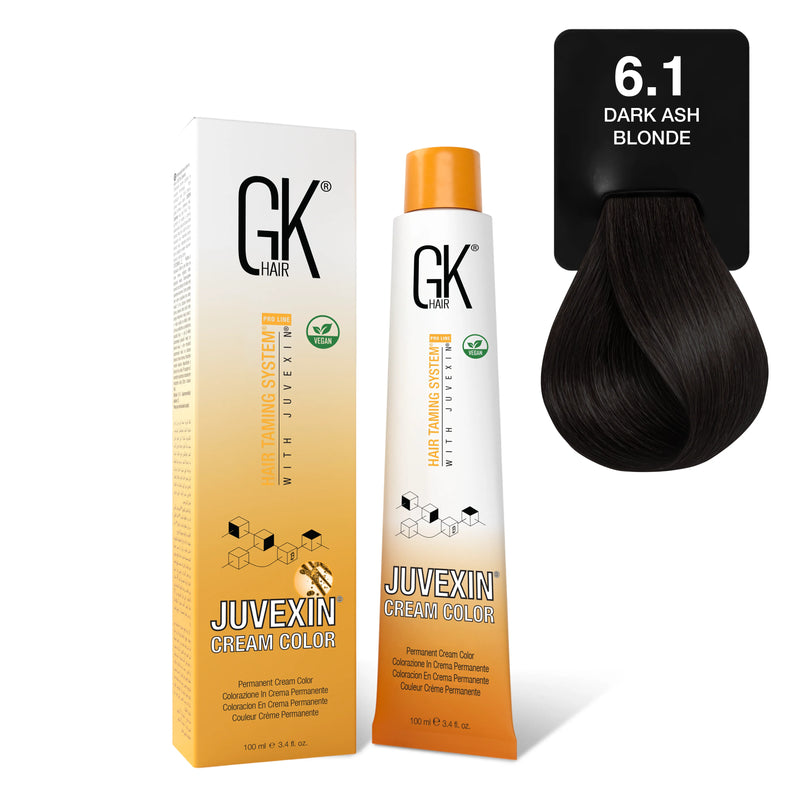
Aim for level 6 to 7: if your hair is already there, the shade only needs to deposit cool pigment, and if it is darker your colourist will lift it to that level first so the exposed orange can be neutralised. Ask for a cool brown formula with an ash tonal direction: our 6.1 Dark Ash Blonde and 7.1 Ash Blonde sit at exactly those levels.

2. Mousy brown hair
Mousy brown hair is a flat, ashy light brown hair colour with very little warmth. It looks most modern as a natural base with fine face-framing balayage, which keeps the grow-out soft. Start at level 6 to 7, with an ash or neutral tonal direction.

3. Golden brown hair
If going blonde is too much, golden brown hair adds some of that brightness while keeping brunette depth intact. It suits warm and neutral undertones well.
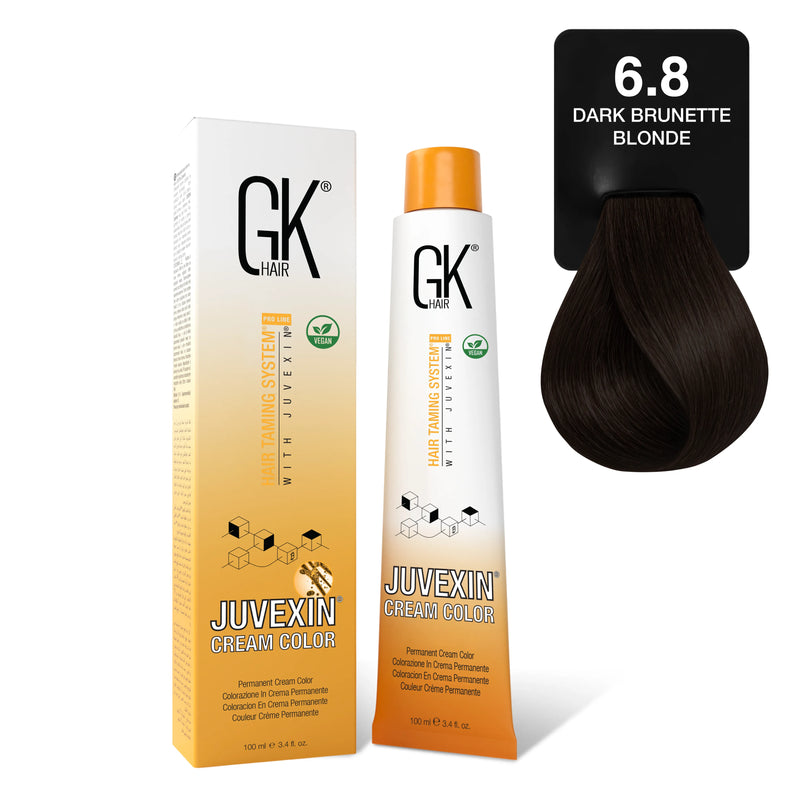
Natural hair at level 6 to 7 can be warmed up with golden pigment directly. Ask for the golden tones to be concentrated away from the root rather than applied as one flat shade over the whole head. Our 6.8 Dark Brunette Blonde holds the depth while the golden pigment is carried through the mid-lengths and ends.

4. Honey brown hair
Honey brown hair combines light brown depth with a soft golden glow: visible warmth without the upkeep of going blonde. It sits at level 6 to 7 with a golden tonal direction, which means the warmth is built into the base rather than sitting on top as a gloss that fades in four weeks. For the most natural finish, introduce honey from the mid-lengths down to the ends through fine highlights or balayage.

5. Caramel brown hair
Caramel brown hair is a warm light brown, lighter and more golden than a chocolate brown and richer than a beige. Caramel adds richness to hair that is already brown: a few caramel streaks lift a medium brown into light brown territory. Start from level 6. Our 6.8 Dark Brunette Blonde holds the base while caramel ribbons are painted through the mid-lengths.

6. Chestnut brown hair
Anyone who wants more richness and personality than a neutral brown will love chestnut brown hair, because it doesn't tip into vivid red. The red is subtle enough to read as depth and shine in most lighting, and only shows as warmth in direct sun. Ask for a level 5 to 6 base with a red-brown tonal direction. Our 5.8 Light Brunette Brown gives the depth, and the red warmth comes from the toner or gloss laid over it.

7. Mushroom brown hair
Mushroom brown is a muted, cool-neutral light brown hair shade inspired by taupe and earthy beige tones. It suits cool and neutral undertones when you want a sophisticated result without obvious gold. A level 6 to 7 starting point gives the softest version. Because mushroom leans cool, the finish comes from an ash or beige tone over that base rather than from a warm brown tube on its own. Keep the beige and ash tones subtle and dimensional rather than one solid formula.

8. Beige brown
Beige brown is a cool-neutral shade that sits between warm and cool, and it is one of the most adaptable of the light brown options. If you don't want a strong gold or ash, a natural-beige brunette with subtle tonal variation is the one to go for. Start at level 6 to 8 depending on your desired depth. Our 7.1 Ash Blonde from the Ash series is the closest match at the lighter end of the range. If you prefer the Brown series, 7.8 Brunette Blonde finished with a beige toner keeps the result from pulling gold.

9. Bronde
Bronde is ideal if you're moving towards blonde but not ready to leave brown behind. A lighter level 6 to 8 gives the colourist flexibility through highlights, balayage or a colour melt. The goal is a gradual transition, not a divide between blonde and brown. Our 7.8 Brunette Blonde is the closest single-tube match before highlights are added.

10. Toffee brown
Can't decide between caramel and golden brunette? Toffee brown sits in between. It suits warm and neutral undertones best, and level 5 to 7 is the right canvas. The colour is built from warm brown pigment with lighter toffee ribbons around the face and ends for movement. Pair 5.8 Light Brunette Brown at the root with lighter toffee pieces from the mid-lengths down.

11. Very light brown hair
Very light brown hair sits at the lightest end of brunette, closest to blonde. Naturally dark brown hair may need significant lifting to reach this depth without turning uneven or too warm. Our 8.8 Light Brunette Blonde is the lightest shade in the brown range.

12. Natural light brown hair
Natural light brown hair means enhancing what is already there without changing it. It works when your natural root already sits at level 5 to 7. Subtle highlights or lowlights then add dimension without changing your base.

Warm, cool or neutral: matching light brown to your undertone
Undertone tells you which direction to go, and skin depth tells you how far. You can check undertone in two ways. Look at the veins on the inside of your wrist in natural daylight: blue or purple veins suggest cool, green suggests warm, and a mix suggests neutral. Or hold a gold and a silver piece of jewellery against your skin: if gold looks more harmonious you lean warm, and if silver looks more natural you lean cool.
On very fair skin, a level 7 or 8 brown can wash you out if it lands within a shade of your complexion, so keep some depth at the root or add lowlights for contrast. Medium and olive skin carries the full level 5 to 8 range comfortably, and golden or caramel tones tend to look most natural there. On deep skin, warm chestnut, toffee and caramel browns at level 5 to 6 read richer than an ash or beige brown, which can look grey against deeper complexions. If you are unsure, hold the shade swatch against your jawline in daylight rather than against your hand.
Warm or cool light brown hair?
Warm light brown hair (golden, honey, caramel, chestnut) flatters warm and olive undertones, although a warm brown against a cooler complexion can be a deliberate contrast. Cool light brown hair (ash, beige, mushroom) suits cool undertones and anyone who dislikes brass. If your starting colour is dark and naturally warm, the exposed warmth has to be lifted and neutralised first. A skilled colourist balances the underlying pigment so the finished brown looks intentional rather than grey or muddy.
Why light brown works on greying hair
Light brown is one of the most forgiving shades to move into as grey comes through. A level 6 or 7 brown sits close enough to most natural greying bases that regrowth reads as a soft line rather than a hard band, so you stretch the time between salon visits.
A deep brunette next to paler skin sharpens every line around the eyes and mouth, while a level 6 or 7 brown softens it, with lowlights at the root on very fair skin. Juvexin Cream Colour covers grey across the brown range, and for resistant white hair our Intense Series mixed with 20 volume developer gives the most even coverage.
Light brown hair colour chart: matching your level
A mousy brown hair colour chart or general light brown chart is most useful when it shows both the depth and the product shade. The table below maps the four target levels in this guide to the Juvexin Cream Colour Brown shade at each depth, with the cool option from our Ash series beside it.
| Hair level | Juvexin Brown shade | Cool option (Ash series) | Best for | Maintenance |
|---|---|---|---|---|
| Level 5 | 5.8 Light Brunette Brown | 5.1 Light Ash Chestnut | Deeper light brown, chestnut, toffee | Low to medium |
| Level 6 | 6.8 Dark Brunette Blonde | 6.1 Dark Ash Blonde | Golden, honey, caramel, light ash, mousy | Medium |
| Level 7 | 7.8 Brunette Blonde | 7.1 Ash Blonde | Bronde, beige, mushroom | Medium |
| Level 8 | 8.8 Light Brunette Blonde | 8.1 Light Ash Blonde | Very light brown | Medium to high |
Use the Brown series for golden, honey, caramel, chestnut and toffee, and the Ash series for ash, mousy, mushroom and beige brown. Chestnut takes its red cast from a red-brown toner or gloss laid over the 5.8 base (5.1 Light Ash Chestnut is the cool level 5 option, not the warm chestnut described above).

Choosing a light brown hair dye
Juvexin Cream Colour is the professional colour line from GK Hair, a brand sold in more than 75 countries, and its brown range is built on the same level system a colourist works from behind the chair. The range includes 4.8 Brunette Brown, 5.8 Light Brunette Brown, 6.8 Dark Brunette Blonde, 7.8 Brunette Blonde and 8.8 Light Brunette Blonde. The formula contains ceramides and Juvexin V2, a plant-based protein derived from quinoa and pea, to support moisture and hair integrity while it colours. If your hair is already within one or two levels of your target, the job may be as simple as depositing or gently shifting tone with Juvexin Cream Colour Brown. For the lightest brown, try 8.8 Light Brunette Blonde.
For help with the application process, see how to mix cream developer.
Light brown hair dye for dark hair
Light brown hair dye for dark hair is not as simple as putting a lighter shade over a dark base. If your natural hair is around level 3 or 4 and you want to reach level 6 to 8, the hair has to move through its underlying warm pigment as it lifts. Dark brown exposes red, then orange, then gold as it lightens, which is why a cool result at level 7 or 8 needs toning rather than lifting alone. The greater the gap between your starting level and your target, the more controlled lightening, toning and condition checks matter, and the lift is safest done in stages across more than one appointment.
If you are moving several levels from a dark natural base, have previously coloured your hair or want a very light brown, a salon assessment is the safer option. The American Academy of Dermatology advises staying within three shades of your natural colour, because lightening further requires higher volumes of peroxide and causes more damage.
How to apply light brown colour at home
-
Test 48 hours before, every time. NHS guidance on hair dye reactions advises testing the dye at least 48 hours before you use it, so dab a little mixed colour behind the ear and on a hidden strand. Don't colour if the skin itches, reddens or swells, and check how the strand's warmth develops once dry.
-
Mix the formula. Juvexin Cream Colour uses one part colour to one and a half parts developer (1:1.5). Use 8 or 10 volume to deposit tone only, or 20 volume for a permanent result with up to two levels of lift and full grey coverage. Leave 30 and 40 volume to a salon.
-
Apply to regrowth first. On a root touch-up, work the formula through the new growth only, then pull the remainder through the lengths for the final ten minutes.
-
Process for the time on your leaflet (GK's current guidance is 35 to 45 minutes without heat), then rinse until the water runs clear and follow with a colour-safe conditioner.
-
Wait two weeks before any second chemical service, including a gloss or a smoothing treatment.

Stylist's corner
Going lighter within brown is still a chemical service. Even when the finished shade looks only slightly lighter, lifting raises the cuticle and changes how the hair holds moisture afterwards. Dermatologists make the same point about colour generally: the American Academy of Dermatology lists colouring among the habits that damage hair, and damaged hair is fragile and tends to break. A 2015 review in the International Journal of Trichology describes the mechanism: permanent colour needs an alkaline pH to open the cuticle scales so pigment can reach the cortex, and that process can strip the cuticle's natural lipid, leaving the hair less able to repel water.
It's common to pick a shade from a photograph rather than from your own level and undertone, but the same light brown reference behaves completely differently on a level 3 brunette and a level 7 blonde. The starting canvas comes first, and the shade name comes second.
Adding dimension: balayage and highlights
You don't always need an all-over colour to achieve a lighter brunette. Dimension can make the hair appear brighter while keeping your natural or darker base intact.
Light brown balayage
Light brown balayage creates lighter pieces through the hair rather than applying one uniform colour from root to tip. It is particularly useful if you want caramel, honey, beige or golden pieces with a softer grow-out.
Balayage is the easiest way to brighten a light brown base because it grows out softly. There is no hard regrowth line to chase, so the colour stays wearable for months rather than weeks. Colourists typically pair it with face-framing pieces or a colour melt so the transition between base and lightened sections has no visible edge.
Light brown hair with highlights
Light brown hair with highlights adds brightness through selected strands rather than changing the whole base. For warmer results, try honey or caramel highlights. For cooler dimension, consider beige or ash. Keep the highlights fine and blended if you want a natural finish.
Want to try something new? Read our guide to Brown Hair with Blonde Highlights.
How to maintain light brown hair colour
Light brown colour gradually loses vibrancy through washing, heat styling, UV exposure and mineral build-up. Warm browns may become less rich as the colour fades, while lighter or highlighted sections can turn noticeably warmer or brassy. How quickly it changes depends on the colour system, hair condition, washing frequency and starting shade.
Switch to a colour-safe wash routine
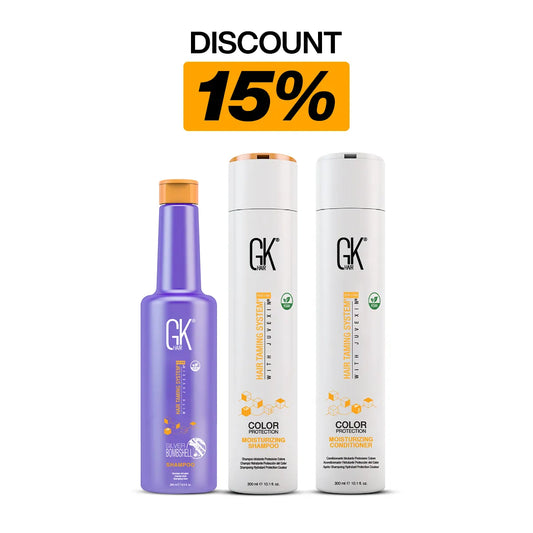
How long light brown lasts depends on the developer. Mixed with 20 volume or higher, Juvexin Cream Colour is permanent and grows out at the root rather than washing out. Mixed with 8 or 10 volume, it deposits tone only and softens over four to six weeks. Either way, sulphates and harsh cleansers pull pigment faster, so the wash routine does more to protect the colour than the shade choice does. Use a colour-protecting shampoo and conditioner like our colour-safe wash duo. It is moisture-infused and helps protect colour from fading.
Schedule touch-ups
As root regrowth happens, your natural colour also returns. For a dimensional colour, ask whether a gloss or toner can refresh the existing colour instead of repeatedly lifting the whole head. An all-over permanent colour usually needs its regrowth done every 4 to 6 weeks. A balayage or natural-base result can go considerably longer, so ask your colourist to set the interval from your regrowth line rather than the calendar.
Reduce exposure to heat
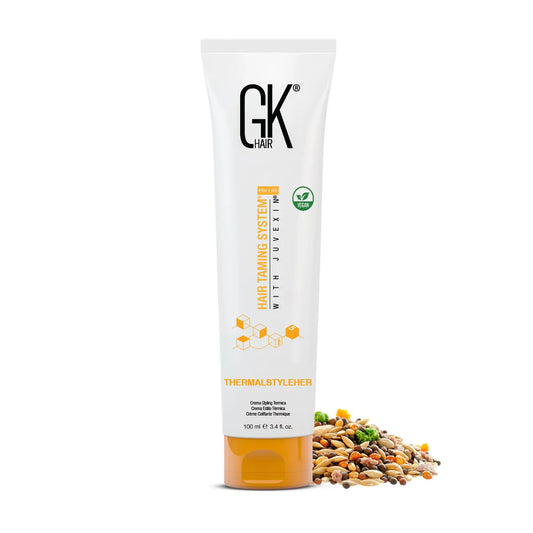
Heat comes from the sun and from hot tools. A leave-in conditioner helps shield your hair from UV rays before you step out, and frequent heat styling fades colour, so minimise it and use a heat protectant whenever you do. We recommend our ThermalStyleHer Cream as a heat protectant.

Find your light brown shade
Pick the shade your level supports, then choose all-over colour, balayage or highlights for the finish you want. Our colour and masque range has the tube and the aftercare to keep it.
Frequently asked questions
What colour of hair is light brown?
Light brown is a brunette shade centred on level 5 to 6 on the professional colour scale, with the level 7 and 8 brunette blondes at its lighter end and level 8 reading as very light brown. It can look warm, cool or neutral, which is why a honey brown and an ash brown can both be considered light brown while appearing completely different.
What is a light brown hair colour called?
It's named by level and tone. Level 5 is light brown, and our level 6 to 8 brown tones are called brunette blonde. Tone gives the everyday name: gold makes it golden or honey brown, red makes it chestnut, and ash makes it mousy, ash or mushroom brown.
What is the best light brown hair colour?
The best light brown hair colour is the one that suits your starting level, undertone and the maintenance you can commit to. Choose ash or mushroom for a cooler result, honey or caramel for warmth, chestnut for red depth, or natural and mousy brown for a more understated finish.
What is the most attractive shade of brown hair?
There is no single most attractive brown because the result depends on the person wearing it. A dimensional brown that complements your undertone and natural depth will generally look more harmonious than a fashionable shade that requires extensive correction or maintenance.
What colour hair makes an older woman look younger?
A soft light brown at level 6 or 7 is one of the most forgiving choices. It sits close to many greying bases, so regrowth shows less, and it softens facial contrast. Face-framing honey or beige highlights bring light back to the face, with a few lowlights at the root if your skin is very fair.